On Spaced Repetition as a Knowledge Management System
How a marriage between the right algorithm and data structure can unlock multiple possibilities in a knowledge management system.

FSRS (Free Spaced Repetition Scheduler) is an algorithm that enhances a learner's ability to recall concepts. It goes beyond basic recall as it distinguishes two modes of memory, "allocation" by the brain: stabilisation and retrievability. Stabilisation refers to how clearly the memory is stored in the brain, while retrievability is how easy it is to recall it. Paradoxically, after multiple successful retrievals, the stabilisation impact begins to diminish with each retrieval since it is approaching a state of long-lasting memory that can last for 25 years or more and becomes resistant to decay. In other words, as a complex concept becomes stable, you begin to receive diminishing returns in stabilisation efforts. FSRS manages this entire repetition pipeline. To learn more, check it out here.
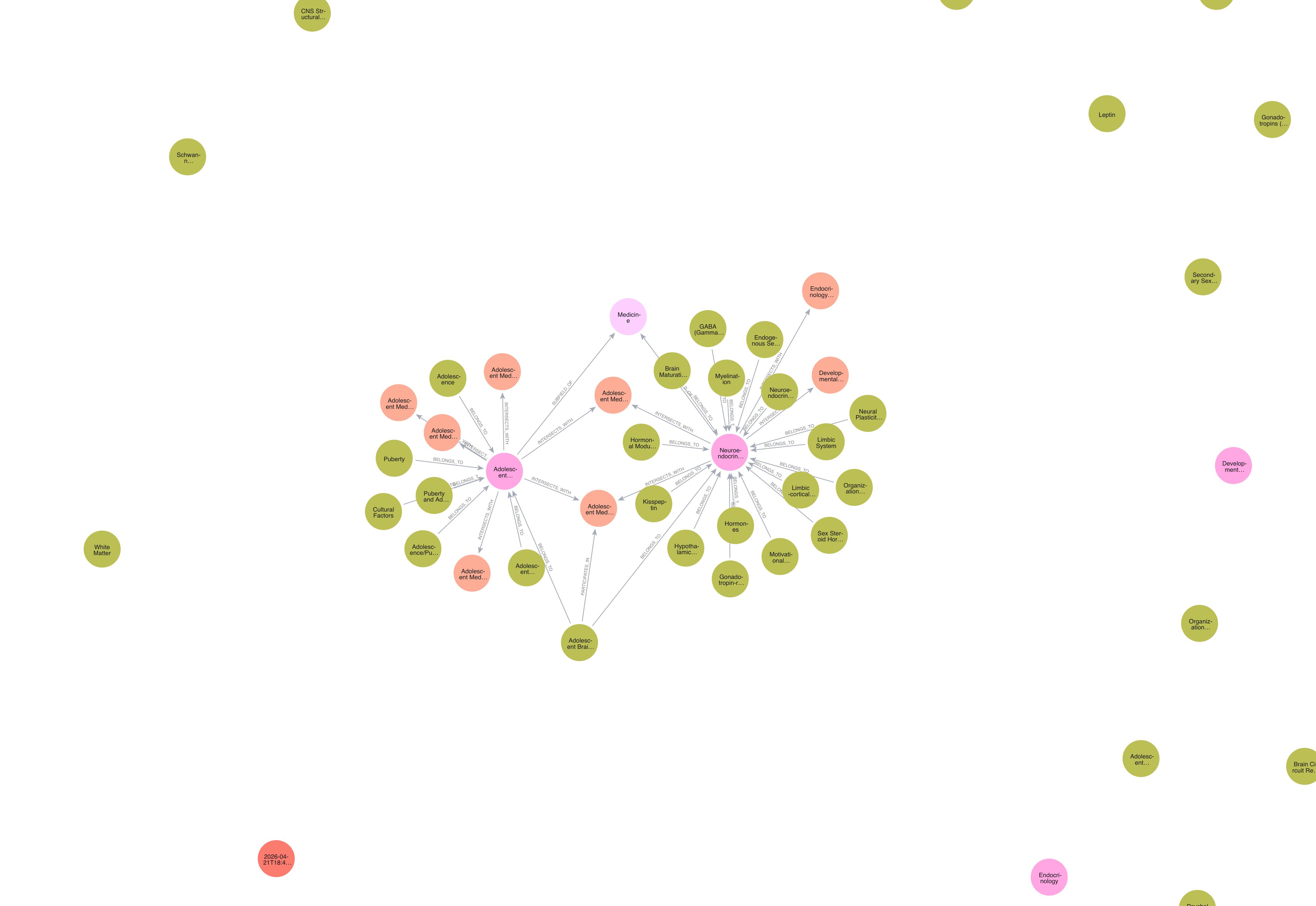
But what it is organising is something more interesting than a flashcard deck. Every review event is a structured claim about the relationship between a learner and a piece of knowledge at a specific point in time. Using a review_log table, the system records not just whether the learner got the question right, but the stability, difficulty, elapsed days, and the evaluator's rationale. Connect that log to a knowledge graph, and it becomes a map of where the corpus has been genuinely integrated and where it has only been visited. The difference between a system that scores answers and a graph-powered knowledge management system is whether you can query that history in ways that reveal something true about the learner's developing understanding.
The review_log and knowledge, taken together, are designed to make that query possible and far-reaching across intersectional points across multiple domains of knowledge.